Modern car keys are no longer the simple cut metal blades they were in 2002. They are small computers with an antenna, a battery, an encrypted chip, and firmware that a vehicle has to recognize. This guide walks through how the technology works, what owners in the Vancouver and Clark County area can do at home, and when it makes sense to bring the car to a specialist.
A short history of the car key
The transition from mechanical to electronic keys happened in three rough stages.The first stage was the transponder key, introduced by most automakers in the late 1990s. The black plastic head of the key holds a small chip with a fixed identification code. When you turn the key in the ignition, an antenna ring around the cylinder reads that code. If it matches what the engine computer is expecting, the immobilizer releases and the car starts. Cars from this era cannot be hot-wired the way an old Civic could, because there is no electrical bypass for the immobilizer check.
The second stage was the remote head key. These look like a single plastic shell that includes both the metal blade and a small set of buttons for lock, unlock, and panic. The blade still starts the car mechanically, but the buttons send a one-way radio signal that operates the door locks. This is the kind of key that still ships with budget Hondas, Hyundais, and Kias built through about 2018.
The third stage is the smart key, also called proximity key, keyless fob, or push-button start. There is no metal blade in normal use. The fob and the car exchange a two-way encrypted handshake any time the fob is within a few feet, and pressing the start button engages the engine without inserting anything into a slot. Most cars built after 2015 ship with this system as a higher trim option, and most luxury and electric vehicles use it as the default.
Why replacement keys are so expensive
The high cost of a replacement smart key comes from four places.- The fob itself costs the manufacturer between $40 and $120, more for European models with extra antennas. Toyota and Honda are at the lower end. BMW, Mercedes, and Volvo are at the higher end.
- The encrypted transponder chip inside has to be programmed to talk to the specific car. That requires a piece of equipment that reads the car's onboard computer through the OBD-II port and writes a new fob identity into memory. Diagnostic equipment for this work runs $5,000 to $20,000 per platform and the software licenses are renewed annually.
- The metal blade has to be cut to match the original lock cylinder, which involves a code that the manufacturer issues per VIN and a milling machine that can handle laser-cut keys for newer cars.
- A trip charge for a mobile service, or an appointment fee for a dealership, gets added on top.
What an owner can do at home
A surprising amount of routine smart key care is genuinely a homeowner-level task.- Replace the fob battery. Almost all smart key fobs use a CR2025 or CR2032 coin cell. Most fobs have a small notch or screw on the side. A flat screwdriver wrapped in cloth opens the case without scratching it. New batteries cost around $3 at the Fred Meyer or Walgreens on Mill Plain.
- Replace the worn fob shell. If the buttons no longer click cleanly or the case has cracked, a replacement shell for many models is available online for $15 to $30. The original chip transfers into the new shell and the car still recognizes it.
- Reset the immobilizer warning. If the dashboard shows a key icon after a battery swap, the standard fix is to hold the fob against the start button while pressing it, which lets the car read the chip through proximity. The exact gesture varies by manufacturer.
- Find a missing fob. If the fob is lost in the car, the BLE-based finders that some manufacturers ship with newer models can locate it through the infotainment screen. Mazda and Volvo are good at this. Older systems do not have the feature.
When a specialist is the right call
There are a handful of situations where bringing the car to a key and security specialist saves money, time, or both.The first is when a fob is lost entirely and there is no spare. Programming a brand-new fob requires either a working spare or specialized equipment that pairs a fresh fob through the OBD-II port. A dealership will tow the car and replace both fobs at a higher cost. A local specialist usually drives to the car, programs the new fob on site, and bills for one fob plus the trip charge.
The second is when the car is a European model. BMW, Mercedes, Audi, Volvo, and Volkswagen each use different encryption families, and a smaller share of independent shops carry the right equipment for each. Calling ahead with the make, model, and year saves a wasted appointment.
The third is when the car is a motorcycle or an older vehicle with a chip-and-blade hybrid system. These need a specialist who works on both automotive and motorcycle platforms regularly.
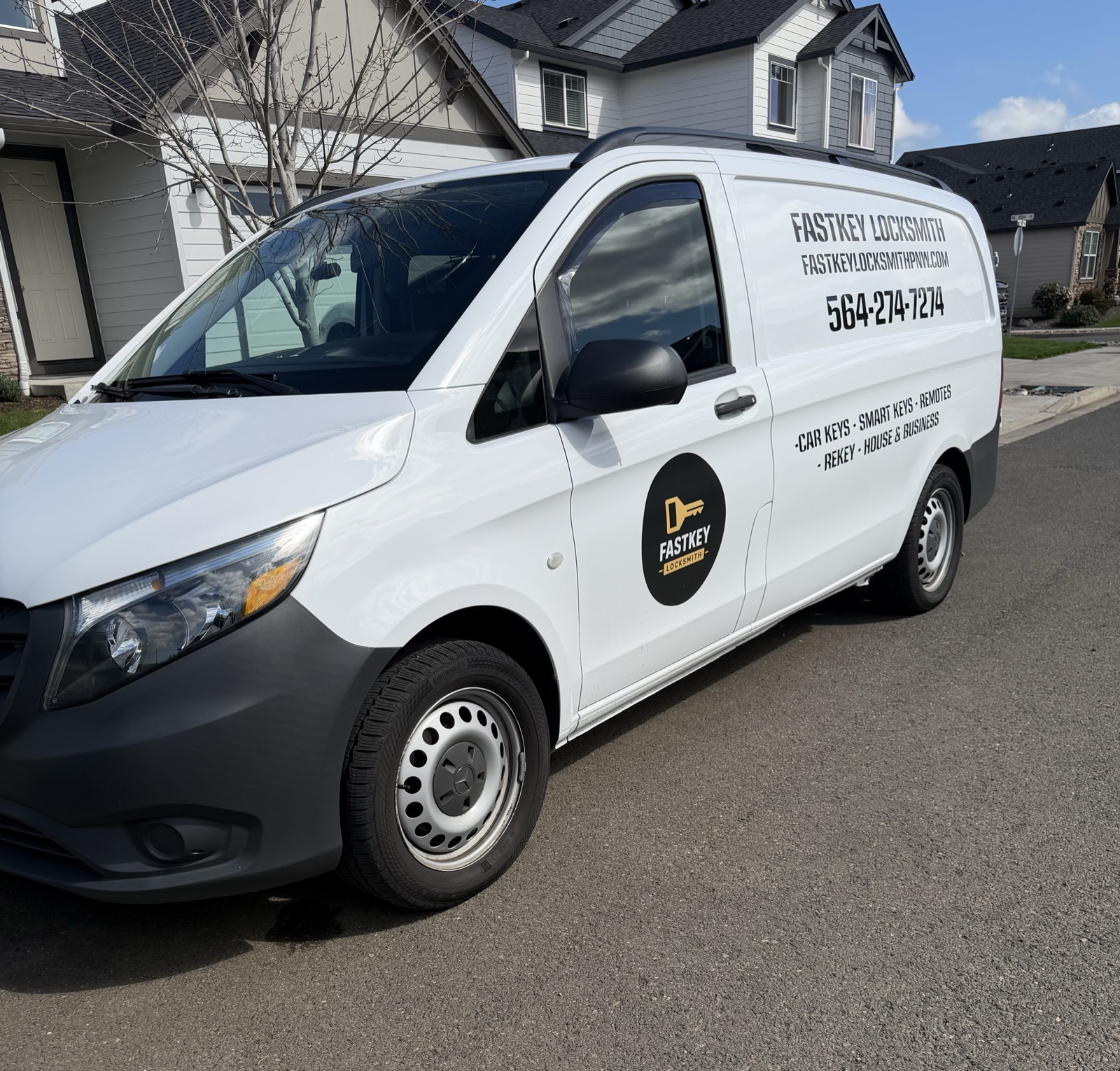
Fastkey is one of the local options in the Vancouver and Clark County area for this work. The shop is owner-operated, drives to most calls in the Vancouver, Hazel Dell, Salmon Creek, Camas, and Washougal area, and confirms the price for any car key or fob job before starting. European and Japanese models are both serviced, and motorcycle keys are part of the regular workload.
Frequently asked questions
Will my car key get rained out at the Fort Vancouver waterfront? Probably not. Modern fobs are sealed against rain and survive splashes well. A full submersion in the Columbia River, on the other hand, will usually kill the electronics. A specialist can pair a new fob in that case.Can I just buy a generic fob on Amazon and program it myself? For some pre-2010 cars, yes, if you have a working spare key and follow the OEM relearn procedure in the owner's manual. For most cars built after 2015, no. The pairing process requires equipment that talks to the encrypted immobilizer.
Why does my dealership want my insurance information before quoting a new key? Comprehensive coverage often covers replacement keys after theft or loss, so the dealership wants to know whether to bill the insurer directly. Independent shops will often quote a flat price either way.
Is it safe to leave a smart key in the car at the trailhead? No. Modern fobs are scanned and amplified by thieves using a relay attack from a few feet away. Leaving the fob inside the locked car at a trailhead lets an attacker amplify the signal from outside and unlock the car. Taking the fob with you is the only reliable defense.
This guide was prepared by Fastkey Locksmith, an owner-operated automotive key, fob, and security service in the Vancouver and Clark County area of southwest Washington.
Fastkey Locksmith Service Area: Vancouver, Hazel Dell, Salmon Creek, Camas, Washougal, and surrounding Clark County, WA Phone: (564) 274-7274 Website: https://fastkeylocksmithpnw.com/ Google Business Profile: View on Google Maps